
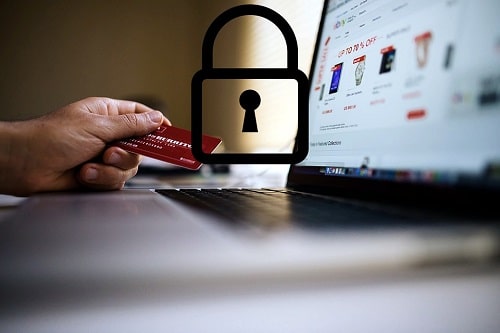
If you are in the world of small commerce, e-commerce or provide any kind of online service, the concept of payment gateway will be very familiar to you. These “bridges” between buyers, sellers and their banks appear whenever a credit card or online payment is involved.
The PAYbyCALL secure card payment technology by phonethat meets the requirements of the PCI-DSS level 1 standard, is integrated with a large number of gateways to make things easy The aim is to provide the merchant with greater security (and often lower commissions) for both him and his customers.
Payment gateways, the vehicle for transactions
When we talk about payment gateways in general terms, it can be both the service itself and the technological tool that makes it possible, or even the service provider itself. This consists, to put it very simply, in “connecting” the management of a payment between the parties involved in a secure and fast way.
We will see it more clearly if we illustrate it by following the steps of any transaction, which could be:
- A customer makes a purchase, i.e. enters in one way or another a series of data (his card and transaction data) in a dataphone, a virtual POS, a website, an e-commerce, or by telephone in an IVR(interactive voice response) system.
- The gateway encrypts this data and sends it to the merchant’s bank (the so-called acquiring bank). It also determines the type of card and transmits the information to the corresponding issuing entity.
- The merchant’s bank sends the payment order and related information to the customer’s bank (which we call the issuing bank). The gateway can inform at this point if additional layers of security are required, sending the customer a confirmation notice.
- The issuing bank analyzes the possibility and legitimacy of the request and approves (or rejects) the transaction. It sends the response to the payment gateway and the acquiring bank, and the transaction is completed (pending confirmation by the merchant).
How do we use payment gateways in an IVR service?
When it comes to a MO/TO type payment system, where the cardholder is not present, payment gateways are primarily looking for security; or, failing that, they apply higher fees. The IVR(interactive voice response) system eliminates the need for human intervention and the recording of bank details in the transaction.

The great advantage is mainly that PAYbyCALL is PCI DSS level 1 security certified, and this allows our customers to enjoy the security levels required to comply with the requirements imposed by the credit card industry consortium.
This means not only greater guarantees of customer data privacy, but also lower fees for payment gateways, especially fees for chargebacks, returns and refunds (and, of course, fees for low PCI DSS compliance).
PAYbyCALL’s payment gateways are…
PAYbyCALL is integrated with the most important payment gateways both in our immediate environment and around the world. We are constantly expanding their number, and this is the list of gateways with which we are integrated, with which banks they operate and their geographical scope.
- Redsys. Spanish banks, in Spain.
- CecaBank (CECA). Spanish banks, in Spain.
- WorldLine/Ingénico Direct. Any bank, worldwide.
- Stripe. Any bank, worldwide.
- AddonPayments. Any bank, worldwide.
- MyMoid. Any bank, worldwide.
- PaynoPain. Any bank, worldwide.
- Lyra (in the process of integration).